Arc Raiders: A Masterclass in Game Theory and the Prisoner's Dilemma

Every time you encounter another squad in an extraction shooter, you’re playing a game that mathematicians have studied for 70 years.
You just don’t know it.
Arc Raiders, the PvPvE extraction shooter from Embark Studios, isn’t just another entry in a crowded genre. It’s perhaps the most deliberate implementation of game theory principles ever designed into a video game. A living laboratory where the prisoner’s dilemma plays out thousands of times per day, with real consequences.
Anyone who knows me knows I was an extremely competitive FPS player, even winning tournaments in Halo and Call of Duty series. To say I was excited to play Arc Raiders would be an understatement. I was downright giddy to have a more gamified entry into extraction shooters.
Something that was going to be deeper than “you see, you kill.” Something adding more degrees of freedom to gameplay reminiscent to the release of Fortnite.
All great games create more options for players to be creative. Arc does that through the constant tension of PvPvE.
But that tension you feel when you see another player? That’s not just anxiety—it’s your brain doing Nash equilibrium calculations (the point where no player benefits from changing strategy alone) in real-time.
The Prisoner’s Dilemma, Explained in 60 Seconds
Before we dive into Arc Raiders, let’s establish the framework.
In 1950, mathematicians Merrill Flood and Melvin Dresher formalized a problem that had puzzled strategists for centuries: when two parties could benefit from cooperation, why do they so often choose betrayal?
The classic setup: Two criminals are arrested. Each can either stay silent (cooperate with each other) or testify against the other (defect). The outcomes:
| Your Choice / Their Choice | They Stay Silent | They Testify |
|---|---|---|
| You Stay Silent | Both get 1 year | You get 10 years, they go free |
| You Testify | You go free, they get 10 years | Both get 5 years |
The math is simple but brutal: The rational choice? Always testify. The optimal outcome? Both stay silent.
This tension between individual rationality and collective benefit is the engine that drives every meaningful player interaction in extraction games.
If you followed that payoff matrix, you’re already thinking about multiplayer dynamics differently than most players. Every extraction game you play from now on, you’ll see this matrix playing out in real-time.

Why Extraction Shooters Are the Perfect Game Theory Laboratory
Traditional multiplayer games simplify the equation. In a battle royale, the goal is clear: kill everyone else. In team deathmatch, your allegiances are predetermined, with no dilemma because there’s no choice.
Extraction shooters shatter this simplicity.
You spawn into large maps searching for resources that humanity needs in its fight against the evil AI machines called Arc (very timely). Players then spend up to 30 minutes scavenging, beating AI NPCs, and eliminating players to loot their haul. With some items worth hours of progress, every player encounter becomes a philosophical crisis compressed into split-second decisions:
- Do I shoot first and gain first shot advantage for survival (but risk dying in the fight)?
- Do I attempt communication and potential cooperation (but risk betrayal)?
- Do I hide and avoid the encounter entirely (but miss potential gains)?
The genius of the extraction format is that it creates asymmetric stakes. The player who’s been in the raid for 20 minutes with a backpack full of rare materials has entirely different incentives than the player who just spawned with nothing to lose.
If you want to see this happen real-time, look no further than a Matriarch raid. The Matriarch is the current biggest baddy in the game and requires multiple people/teams to take it down for its exotic loot. During the battle it’s common to surround the mammoth machine and take turns attaching mines, lobbing grenades, and doing just about anything to knock off its armour and whittle its HP. At this time it’s a glorious battle of players working hand in hand to show the Arc that humanity can band together and you see it first hand when players are being knocked down (the stage before death) and other players will pick them up…
But when the gigantic mech is taken down the real game starts. Some players are bound to get less loot than others and that usually doesn’t sit well with them. The shooting begins and mayhem ensues.
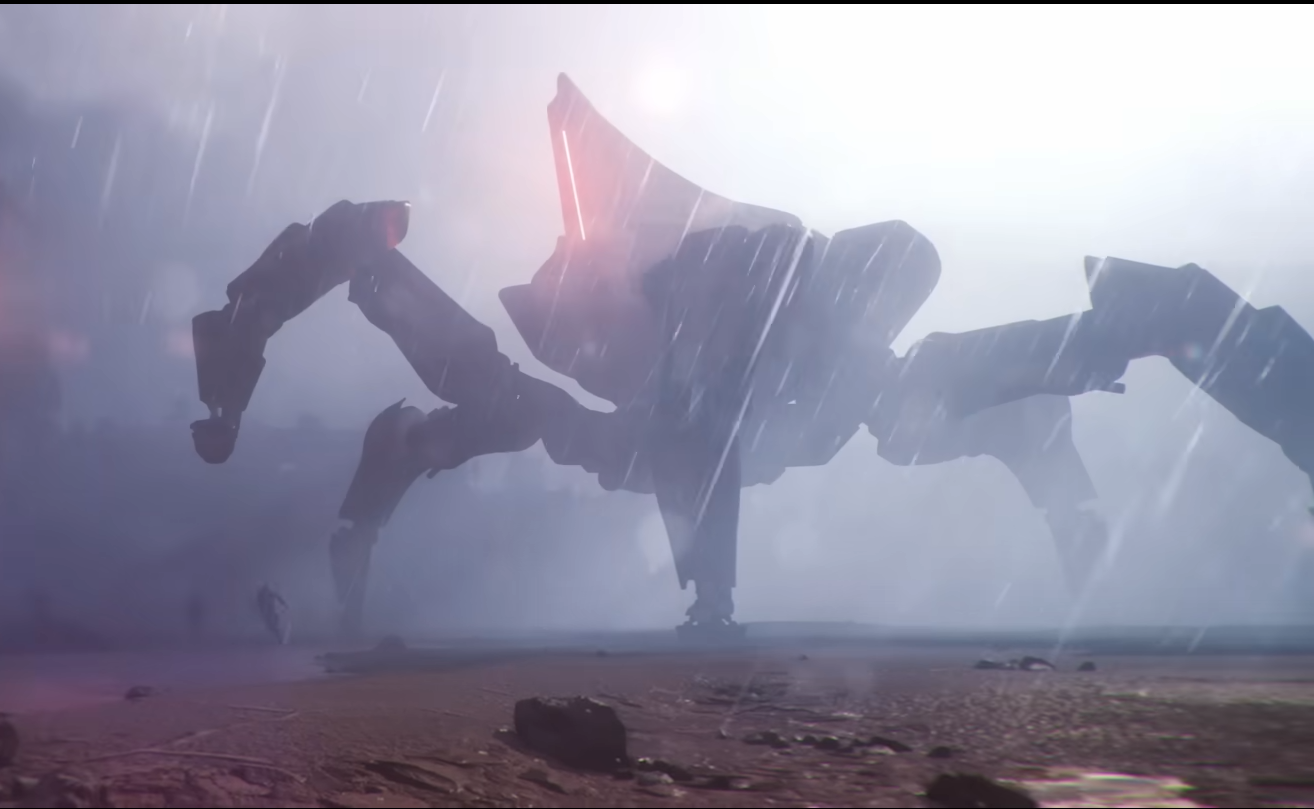
This asymmetry is absent from the classical prisoner’s dilemma. And it makes extraction games far more interesting.
Arc Raiders’ Unique Position: The PvPvE Variable
Here’s where Embark Studios introduces a variable that changes everything: the ARC.
The mechanized and maybe alien threat isn’t just set dressing. It’s a game theory intervention.
In pure PvP extraction games like Escape from Tarkov, the dominant strategy trends toward “kill on sight.”
Why? Three reasons:
- There’s no external pressure requiring cooperation
- The only resource competition is between players
- Trust has no evolutionary advantage
Arc Raiders changes the equation by introducing threats that require cooperation to overcome. Suddenly, the payoff matrix shifts:
| Your Choice / Their Choice | They Cooperate | They Betray |
|---|---|---|
| You Cooperate | Both survive the ARC, share resources | You die to ARC (distracted by betrayal) |
| You Betray | You maybe survive alone (but struggle vs ARC) | Both probably die to ARC |
The ARC functions as what game theorists call a “common enemy.” A mechanism that increases the relative value of cooperation without eliminating the temptation to defect.

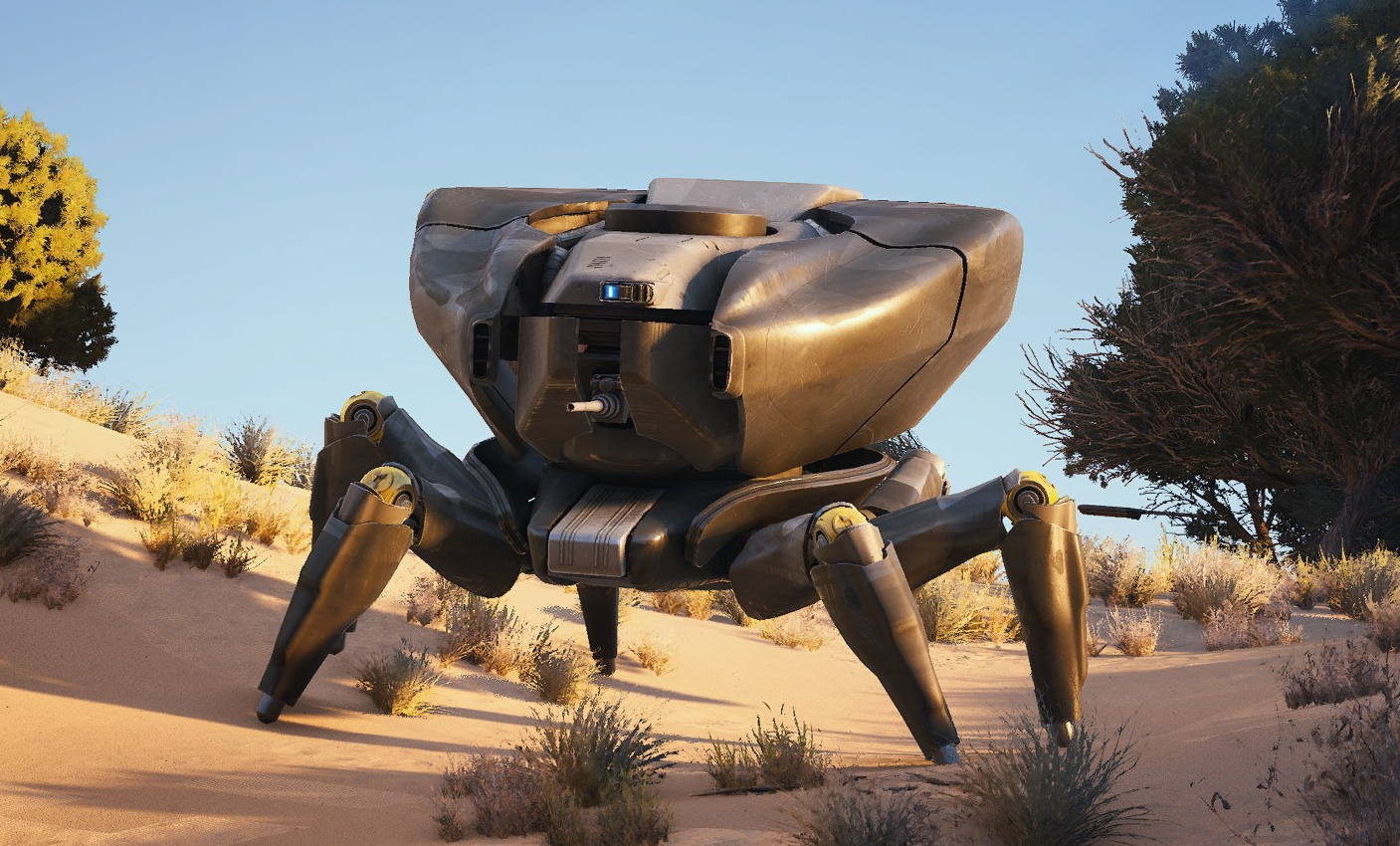
Let’s be real about what this means: Embark built a massive robot army specifically to make you reconsider shooting that guy with the Pew Pew emote.
The Iterated Prisoner’s Dilemma: Where Reputation Matters
The classical prisoner’s dilemma assumes a one-shot game. You’ll never see this person again. There’s no tomorrow where your choice today forms the next game.
But extraction games aren’t one-shot. They’re iterative.
In 1980, political scientist Robert Axelrod ran a famous tournament asking game theorists to submit strategies for the iterated prisoner’s dilemma. The winner? A simple strategy called “Tit for Tat”:
- Start by cooperating
- Do whatever your opponent did last round
The lesson: in repeated games, reputation matters. Cooperation can emerge even among self-interested actors if they expect to meet again.
Understanding Tit for Tat gives you a superpower: you now know why reputation systems work (or fail) in every online game you’ve ever played. That’s a framework most game designers don’t consciously use.

Arc Raiders has the opportunity to operationalize this insight through:
- Player Matchmaking that pools players depending on Co-op/aggression score
- Persistent player identities that carry reputation across sessions
- Regional servers where the player pool is small enough for recognition
I assume in the future:
- Faction systems that create in-groups with cooperative norms
But the question for Embark isn’t whether to include these systems. It’s how to balance them against the raw tension that makes extraction games compelling in the first place.
The Trust Problem: Signaling Without Binding Commitments
Here’s the fundamental challenge: how do you cooperate in a world where promises are unenforceable?
In Arc Raiders, as in all extraction games, you can:
- Use proximity voice chat to negotiate
- Perform gestures or emotes to signal peaceful intent
- Drop items as a show of good faith
But none of these are binding. Every signal can be a lie and every peace offering can be a trap.
This is what economists call a “cheap talk” problem. Communication is meaningless precisely because it costs nothing to lie.
The design solutions are fascinating, mainly coming in the form of Costly Signaling.
Making peaceful signals expensive. By exposing myself to harm or sacrificing valuable resources to demonstrate peaceful intent, my signal becomes credible precisely because a hostile actor wouldn’t pay that cost. At the same time I could be signaling I have limited items for the taking. Lastly, having lobbies consistent with like-minded players could help like-minded players battle it out or co-op through matches.
Each of these solutions has tradeoffs. Costly signaling slows down gameplay. In this 3D game you can visibly see some of the other raiders gear. Matchmake too narrowly limits the tension in the game.
The art is in the balance.
The Extraction Point Problem: Why Betrayal Incentives Peak at the End
Here’s a pattern anyone who’s played extraction games knows intimately:
The closer you get to extraction, the more dangerous other players become.
This isn’t paranoia, but fundamental game theory.
Throughout a raid, cooperation has ongoing value. We might fight more ARC together. We might find more loot together.
But the game isn’t over…
When you reach the extraction point, the game is over. There’s no future to cooperate in. The iterated game becomes a one-shot game.
And in one-shot games, defection is dominant.
This is why extraction points become killing fields. It’s why players who’ve cooperated for 25 minutes suddenly betray each other in the final seconds. It’s not personality. It’s structure, but again, more options allow for more excitement.
I’ve been the good guy… and I’ve been the bad guy in these scenarios. Funny enough I identify as a natural Tit for Tat player, only betraying after I have been betrayed (sorry whoever you are!)
The most painful is when you’ve been playing with someone for 10 minutes, even fighting off other Raiders together, and as you enter the extraction you hear that sound of a Trigger grenade landing at your feet. They’ve been playing the long game and rather than bagging a good haul, they now have twice the choice and I was their sherpa for this match.
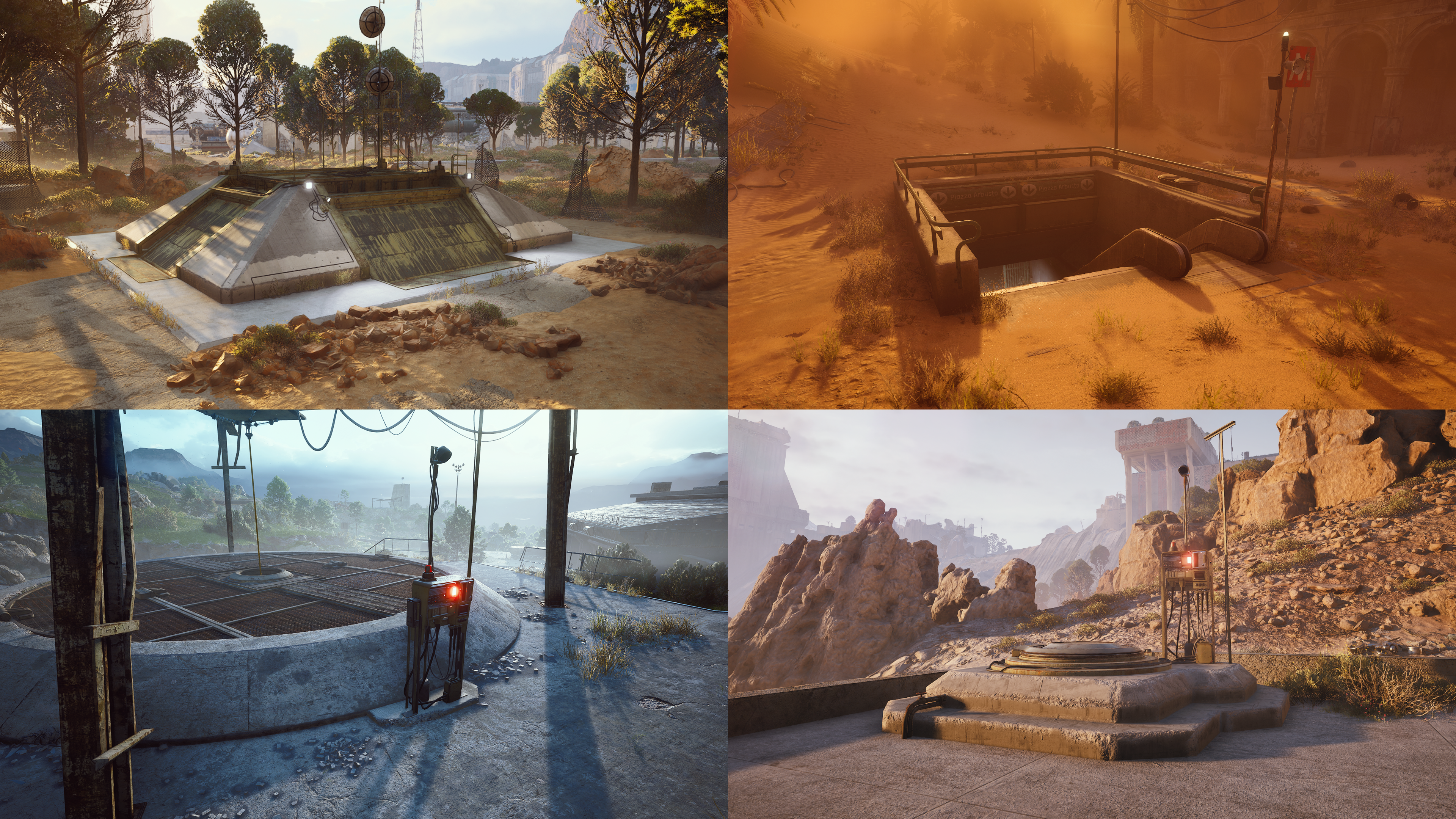
Smart game design creates variable tension throughout the game with:
- Multiple extraction points that reduce bottleneck concentration
- Extraction closures where one extraction point closes every 5mins
- Open extraction where players leave sequentially rather than simultaneously
- Raider hatch keys for additional options for players throughout the match
The Meta-Game: How Communities Evolve Norms
I’d be missing a HUGE part of the game if I didn’t touch community.
Beyond individual encounters, extraction games develop cultures.
Escape from Tarkov’s playerbase trends heavily toward “kill on sight” with occasional wiggle-based peace attempts. The Cycle: Frontier developed more nuanced cooperation norms. Hunt: Showdown has regional cultures that differ dramatically.
These cultures emerge from the interaction between:
- Game mechanics that incentivize certain behaviors
- Content creators who model and normalize behaviors
- Community platforms where norms are discussed and enforced
- Developer updates that shift the incentive landscape
I’ve spent 150+ hours in the game and I’ve noticed a few fluctuations of community-wide behaviour based on in-game events.
Me and a friend were running a duos raid, which once you go duos and trios there’s far more brutality due to the additional degrees of freedom (you need 5 others to agree to peace). During this raid we decided to go into one of the most contested buildings in the entire game.
Unsurprisingly, we were met right away by another team in the building’s basement level, but immediately heard the “Don’t shoot” call. We didn’t skip a beat and ran with the team upstairs only to find two other teams. Coincidentally one team threw out the call and all just ran along peacefully. We all said hi and laughed about it and went along our scavenging ways.
There is no other time in this game you could get 8 players in a room without a massacre happening.

Arc Raiders enters this space with a choice: cultivate a specific culture intentionally, or let one emerge organically and hope for the best.
My prediction? Embark Studios will lean into the cooperative framing (humanity united against the ARC) while preserving enough competitive tension to generate the memorable moments that drive streaming and word-of-mouth.
What Arc Raiders Can Teach Product Managers
If you’re a product manager reading this (hello, fellow traveler), extraction games offer a masterclass in incentive design:
Lesson 1: Users Respond to Structure, Not Intentions
It doesn’t matter how much you want users to cooperate. If defection is the dominant strategy, they’ll defect. Design the payoff matrix before designing the features.
Lesson 2: Repeated Interactions Change Everything
If your users will encounter each other repeatedly, reputation systems become viable. If they won’t, you need other mechanisms to encourage cooperation.
Lesson 3: Asymmetric Stakes Create Interesting Dynamics
When different users have different things to lose, their behavior becomes harder to predict. But also more diverse and engaging.
Lesson 4: External Threats Unite
Introducing a common challenge (market competition, shared deadlines, external enemies) can shift internal dynamics from competitive to cooperative.
Lesson 5: Trust Is a Design Problem
If your system requires trust between parties but offers no mechanisms to build or verify trust, don’t be surprised when it breaks down.
You now have the same game theory framework that billion-dollar companies use to design user behavior systems. Next time you’re designing features that require cooperation, you’ll spot the trust problems before they become production disasters.

The Future: Computational Game Theory Meets Game Design
Here’s where it gets really interesting.
Modern game developers have access to tools that Flood and Dresher could only dream of: massive player behavior datasets, real-time analytics, machine learning models that can predict and respond to emerging patterns.
Imagine an extraction game that:
- Dynamically adjusts AI threat levels based on observed cooperation rates
- Matches players by behavioral tendency to create more interesting encounters
- Introduces seasonal mechanics that shift the meta-game intentionally
- Uses reinforcement learning to discover new equilibria that human designers wouldn’t anticipate
Arc Raiders may or may not implement these specific ideas. But someone will. The intersection of game theory and game design is only beginning to be explored.
Conclusion: Why This Matters Beyond Gaming
The prisoner’s dilemma isn’t just an academic curiosity or a game mechanic. It’s a model for understanding:
- Why international climate agreements are so hard to enforce
- Why cartels are inherently unstable
- Why commons get tragically depleted
- Why political polarization accelerates
- Why trust, once lost, is so hard to rebuild
Extraction games like Arc Raiders give us a sandbox to experiment with these dynamics in compressed time, with immediate feedback, at scale.
Every raid is an experiment. Every encounter is a data point. Every emergence of cooperation or descent into chaos teaches us something about how trust works. And doesn’t.
When Arc Raiders fully launches, I’ll continue playing it not just for the loot or the gunplay. I’ll be watching the social dynamics, tracking how norms emerge, observing how the community evolves from its beta foundations.
Because the most interesting thing about Arc Raiders isn’t the ARC. It’s us.
What’s your approach when you encounter other players in extraction games? Shoot on sight, attempt communication, or something else entirely? The payoff matrix wants to know.